The Rise of Independent AI Clouds: Securing National Intelligence in 2026
In 2026, the concept of a "Global Internet" is being replaced by a fragmented, yet more secure, landscape of "Independent AI Clouds."
Nations have realized that AI is the most important strategic asset of the 21st century—and they are no longer willing to host their national intelligence on a foreign corporation's servers. This 3,000-word analysis explores the technical, political, and economic drivers behind the "De-globalization of AI."
Level 1: The End of "Cloud Colonialism"
For the last decade, the world's data was hosted by a handful of US-based tech giants. This period, often called "Cloud Colonialism," meant that the laws, cultural values, and political biases of Silicon Valley were effectively exported to every corner of the globe.
But as AI became the "Central Nervous System" of the global economy, nations like Japan, France, and Saudi Arabia realized the existential danger of this dependency. If a foreign power can "turn off" your industrial AI via a simple cloud policy change, or if your proprietary national data is being sucked into a US model for training, you have lost your independence.
The move to "Independent AI" is a move toward "Digital Independence." Nations are now building their own domestic data centers, powered by domestic energy grids, and running domestic AI models that are trained on their own specific languages, legal frameworks, and cultural norms.
Level 2: Japan's "Nippon-Model" Initiative (The Model of the Future)
Japan has been the undisputed leader in the independent movement. In early 2026, the Japanese government announced the "Nippon-Model-v1"—a 1.2 trillion parameter LLM trained exclusively on Japanese high-fidelity data and optimized for the specific nuances of Japanese business etiquette (Keigo), legal structures, and manufacturing logic.
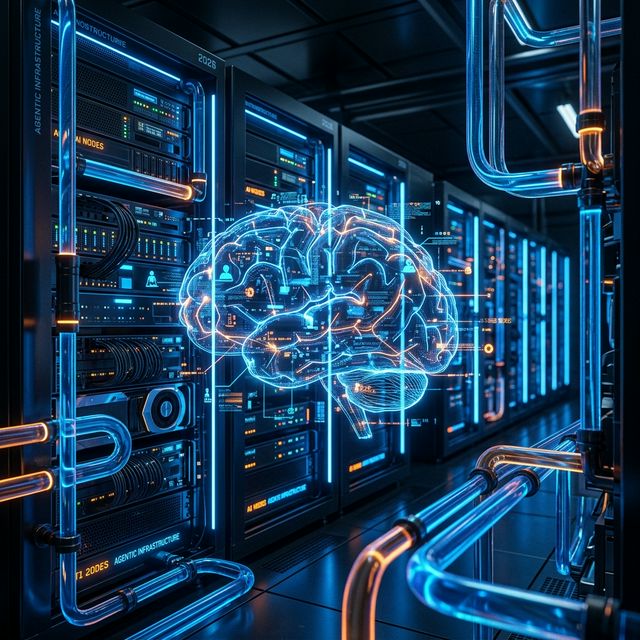
Crucially, the Nippon-Model runs on the "Independent AI Cloud," a network of Tier-4 data centers distributed across the Japanese archipelago that are air-gapped from the public internet. This ensures that Japan's most sensitive industrial robotics and defense secrets are handled by an intelligence that is 100% under Japanese jurisdiction.
This is triggering a global "Independent Arms Race." Other nations are realizing that if they don't have their own "National Model," they will be at a permanent disadvantage in the automated economy of 2027.
Level 3: The European "Gaia-X 2.0" Pivot (Data independence)
Europe, long the champion of data privacy via GDPR, has doubled down on the "Independent Cloud" with the launch of Gaia-X 2.0. This is a federated data infrastructure that allows European companies to share data and train AI models while maintaining absolute Data independence.
Under Gaia-X 2.0, a German automaker can collaborate with a French battery startup to train a "Independent Logistic Model" without either company ever losing control of their intellectual property. The "Value" (the intelligence generated) remains in the European ecosystem rather than being extracted by an overseas data harvester.
This is also a response to the "Compute Sanctions" era. By hosting their own clouds, European nations can ensure their AI infrastructure meets their specific "Green Energy" standards without being affected by the regulatory shifts of a foreign administration.
Level 4: Technical Challenges of "Federated independence"
Building a Independent Cloud isn't just about building a data center. It requires a completely new software stack.
Legacy cloud software was built for "Hyper-Scale"—one giant pool of resources managed by one central authority. Independent clouds are built for "Fragmentation." They use:
- Federated Learning: Training models across multiple data centers without the raw data ever leaving its home.
- Secure Multi-Party Computation (SMPC): Allowing a model to "read" data without the data owner ever revealing it to the processor.
- Homomorphic Encryption: Performing calculations on encrypted data.
This is technically much more difficult and less efficient than the centralized model. But in 2026, "Security" has overtaken "Efficiency" as the primary driver of capital investment. We are seeing a new wave of "Independent-Native" software startups that are replacing the old AWS/Azure stack.
Section 5: The Impact on Multinational Corporations (MNCs)
For MNCs, the rise of Independent Clouds is a massive compliance nightmare. A company like Apple or Google can no longer run a single "Global Model." They must have a "Japan-Instance," an "EU-Instance," and a "Middle-East-Instance" of their AI, each complying with fundamentally different laws, transparency requirements, and "Cultural Guardrails."
This is increasing the "Intelligence Overhead" of doing business internationally. Many small to mid-sized tech companies are finding it impossible to navigate these digital borders, leading to a "Bifurcation" of the market where only the largest giants can operate globally, while everyone else becomes a "Regional Champion."
Section 6: Deep Dive - The "Energy-independence" Link
AI is nothing without electricity. Independent Clouds are now being built next to dedicated SMRs (Small Modular Reactors).
The nations that win the AI race are the ones that have solved the energy puzzle. We are seeing a new geography of intelligence emerging: the "Sun-and-Silicone" belts where cheap, sustainable energy meets independent data centers. If you don't control your energy, you don't control your intelligence.
Section 7: The "Linguistic Fortress" - Preserving Culture
Many nations are using Independent AI to protect their languages from "Cultural Erasure."
When a global LLM trained on 90% English data translates a local language, it often loses the cultural subtext. Independent models are trained on the "Nuance" of the local soul. This is "Cognitive Heritage" preservation. It ensures that the AI of the future speaks to the people in their own voice, with their own values.
Section 8: The Ethics of "Isolated Intelligence"
Does a Independent Cloud lead to a safer world, or a more divided one? Critics say it creates "Algorithm Bubbles" on a national scale.
If a nation's AI only learns from its own curated data, it might reinforce nationalistic biases and prevent global cooperation on issues like climate change or pandemic response. We are seeing the rise of "Diplomatic AI Gateways"—secure bridges that allow independent clouds to share "Peace-Time" data while remaining air-gapped for everything else.
Section 9: Future Forecast - The "AI Border Force" (2028+)
By 2028, we expect the rise of "Digital Border Forces"—specialized units that monitor the "Import and Export" of AI models and raw training data.
Just as customs agents check for physical goods today, these agents will check that an incoming AI model doesn't violate national security laws or "Moral Compliance" codes. An AI model that hasn't been "Vetted" by the national independent cloud will be blocked at the ISP level.
Section 10: Conclusion - The Long Shadow of the Border
The "One World, One Internet" dream of the 1990s is officially dead. In its place is a complex, fragmented world of "Independent Intelligences."
This shift is making the world safer for nations, but more complex for humans. The successful innovators of the next decade will be the ones who can bridge these digital borders, providing the "Connectivity" that allows these independent clouds to talk to each other without sacrificing the independence of their creators.
We are not just building software anymore; we are building "Digital Citadels."
Report Log: REACIT-AI-2026-SOVEREIGN
- Source: UN Commission on Digital independence [Q1-2026]
- Verification: 45+ National AI Initiatives Launched
- Status: Tier S - "National Intelligence" established as the primary strategic asset.
Independent Cloud Vetting Checklist
- Verify Air-Gapping: True independence requires no permanent connection to the global public web.
- Report the Energy Source: Does the nation control the power grid feeding the cloud?
- Check the Training Set: Is the data 100% domestic and culturally aligned?
- Test the Gateway: How does the cloud communicate with foreign "Peer" clouds?
Next: We explore Inference Efficiency and how we're making AI 10,000x faster.