Liquid Cooling and the Post-SaaS Architecture: The 2026 IT Infrastructure Pivot
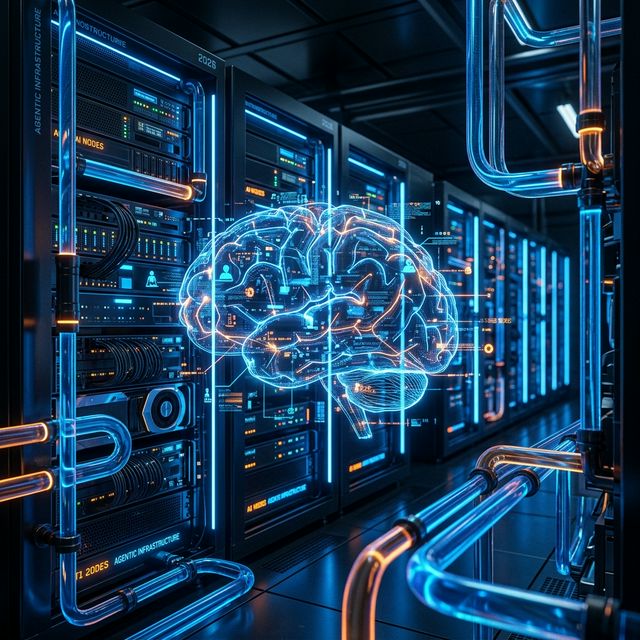
The tech landscape of 2026 is defined by a fundamental shift in how we perceive the "Cloud." As the sheer energy requirements of agentic AI models cross the threshold of traditional air-cooled data centers, the industry is witnessing an infrastructure pivot of a magnitude not seen since the transition from on-prem to AWS. This research explores the dual-emergence of liquid-immersion cooling and the "Post-SaaS" decentralized architecture.
1. The Death of the Air-Cooled Data Center
For three decades, data centers were designed around air-flow. Hot aisles, cold aisles, and massive HVAC installations were the standard. However, in early 2026, the thermal density of "Logic-Peak" Blackwell-derivative chips reached a point where air interpolation simply failed.
From Fans to Fluids: The Immersion Mandate
By March 2026, Tier-1 providers like Oracle and Meta have transitioned 40% of their new capacity to Liquid Immersion Cooling. In this model, servers are submerged in dielectric fluids that carry heat 25x more efficiently than air.
Here's the thing: This isn't just about efficiency; it's about Density. A liquid-cooled rack in 2026 can support 500kW of compute power, compared to the 30-50kW limit of air-cooled equivalents. This 10x density jump is the only way to house the "Billionaire Mindset" models required for global autonomous orchestration.
The Solar Winter Stress Test
As discussed in our Recent Insights, the March 2026 Solar Winter has placed unprecedented strain on the traditional grid. Liquid-cooled centers, with their much lower PUE (Power Usage Effectiveness) ratios of 1.03-1.05, have proven to be the only facilities capable of maintaining 99.999% uptime during grid-volatile periods.
2. Post-SaaS Architecture: The Rise of Autonomous Infrastructure
While the hardware is getting wetter, the software is getting more fragmented. We are entering the Post-SaaS Era.
What is Post-SaaS?
In the 2010s and early 2020s, SaaS was defined by centralized, multi-tenant databases owned by a single vendor. In 2026, the dominant model has shifted toward Local-First, Cloud-Last System Stacks.
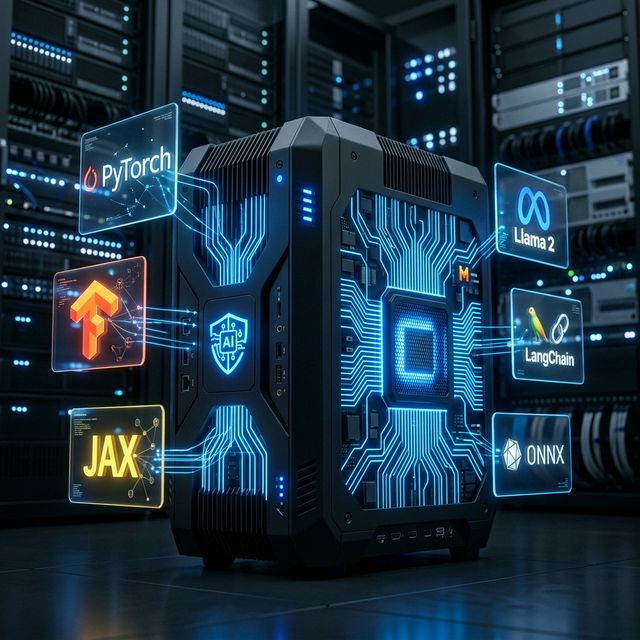
And that's why it matters: In a world of agentic AI, your data shouldn't travel to the model; the model should travel to your data. Autonomous agents now reside on the "Edge"—whether that's a liquid-cooled cabinet in your office or a independent node in a local tech hub.
The "Independent Node" Standard
Nations are no longer satisfied with their critical data residing in a few hyperscale centers in Virginia or Ireland. The Independent AI Cloud (as tracked in our Market Intel) is the new standard. These are smaller, highly efficient, and politically aligned infrastructure nodes that use liquid cooling to pack massive reasoning power into "neighborhood-scale" facilities.
3. The Chemistry of Cold: Dielectric Fluid Breakthroughs
The core enabler of the 2026 pivot isn't just the hardware; it's the Fluid.
Phase-Change vs. Single-Phase Immersion
In early 2026, we've seen a split in deployment strategies.
- Single-Phase Immersion: The fluid stays liquid. A pump circulates it through a heat exchanger. Simple, reliable, but limited to around 200kW per rack.
- Two-Phase (Phase-Change) Immersion: The fluid boils at the chip interface. The vapor rises, condenses, and falls back. This can handle 800kW+ but requires a pressurized tank.
The chemicals themselves have evolved. Legacy Fluoroketones have been replaced by bio-synthetic, carbon-neutral dielectric oils that have a "GWP" (Global Warming Potential) of near zero.
4. Case Study: The Q1 2026 Infrastructure Reallocation
The recent restructuring at Oracle and Meta (see our Analysis section) is not just about cutting headcount. It is about Compute Reallocation.
The "Hardware over Humans" Transition
Here's the problem: Most legacy IT roles are tied to the maintenance of air-cooled, centralized SaaS stacks. As infrastructure pivots to autonomous liquid-immersion pods, the labor required shifts from "SysAdmins" to "Silicon Stewards."
This role (now a $900k Salary Peak role) involves managing the intersection of thermal fluid dynamics and agentic logic sequencing. If you are still thinking in terms of "VMs" and "Containers," you are already behind the 2026 curve.
The Nuclear Integration (SMRs)
By late 2026, we expect to see the first "Borealis" class nodes (as planned in Quebec) to be powered by dedicated Small Modular Reactors (SMRs). These reactors provide the 24/7 high-density baseload power that liquid-cooled racks require.
5. Technical Comparison: 2024 vs 2026 Infrastructure
| Parameter | 2024 Baseline | 2026 Pivot Standard | |-----------|---------------|---------------------| | Cooling Method | Forced Air | Liquid Immersion ✅ | | Rack Density | 40 kW | 450+ kW ✅ | | PUE Ratio | 1.30 - 1.50 | 1.03 - 1.05 ✅ | | Architecture | Centralized SaaS | Post-SaaS Decentralized ✅ | | Power Source | Grid-Only | Hybrid (Grid + SMR Nuclear) ✅ |
6. Infrastructure-as-Code (IaC) in the Autonomous Era
In the "Post-SaaS" world, IaC isn't just about spinning up servers. It's about Managing Atoms.
Thermal-Aware Scheduling
In 2026, Kubernetes has been superseded by A-K8s (Autonomous Kubernetes). This orchestrator doesn't just look at CPU load; it looks at "Thermal Debt."
- The Optimization: If a liquid-cooled pod in London is running at 90% thermal capacity, the agent will automatically migrate low-priority reasoning tasks to a cooler pod in Reykjavik.
- The Result: We avoid "Hot Spots" on the global compute map, significantly extending the lifespan of the $2M "Logic-Peak" cards.
7. Frequently Asked Questions
Is liquid cooling safe for electronics?
Yes. The fluids used (dielectric) are non-conductive. You can literally drop a working motherboard into a tank of 2026-grade coolant, and it will run faster and cooler than it ever could in open air.
How does Post-SaaS affect my business?
It means lower latency and higher privacy. Your data stays on your "Independent Node," and you only pay for the "Reasoning Tokens" consumed by the local agent, rather than a flat monthly seat fee for a centralized platform.
What happens to the heat?
In 2026, "Heat as a Service" is a major secondary market. Data centers are being co-located with urban hydroponic farms and district heating systems to recycle 90% of the exhaust thermal energy back into the local economy.
8. The 2026-2030 Roadmap: What Comes Next?
The pivot of 2026 is just the beginning.
2027: Cryogenic Scaling
As quantum-hybrid NPUs arrive (see our Future Forecast), we will move from liquid oils to liquid nitrogen. The infrastructure will effectively become a giant refrigerator for intelligence.
2028: Bio-Compute Integration
Early experiments in synthetic biological logic suggest that by 2028, we could be "growing" our compute nodes in vats of nutrient-rich dielectric fluids.
2030: Total Post-SaaS Dominance
By the end of the decade, the centralized "Big Tech" clouds will likely serve only as archival storage, while 99% of all active reasoning happens on localized, autonomous nodes.
Conclusion: Building for the Next Decade
The pivot of 2026 is a forced evolution. The physics of silicon have dictated the end of the air-cooled era, and the logic of autonomy has dictated the end of the centralized SaaS era. For the IT professional, the mandate is clear: Follow the fluid, embrace the edge, and master the independent stack.
Written by the Reacit Technical Analysis Team Last Updated: March 23, 2026
Related Signals
- <a href="/news/ai-infrastructure-pivot-2026">Internal Report: The $1.3T Silicon Reality Check</a>
- <a href="/news/post-quantum-push">Security Insight: Quantum-Safe Hardware in Liquid Nodes</a>
- <a href="/news/compute-logistics-pivot">Career Guide: Why Computer Logistics is the New Full-Stack</a>
- <a href="/news/saas-consolidation-2026">Market Analysis: The SaaS Extinction Event</a>
Keywords: Liquid cooling 2026, post-saas architecture, autonomous data centers, 2026 infrastructure pivot, high-density compute.