Meta's Permanent "Year of Efficiency": The 2026 Flat-Structure Revolution
In 2023, Mark Zuckerberg declared the "Year of Efficiency." In 2026, we realize that wasn't a "Year"—it was a "Permanent Restructure." Meta has announced a further 15% reduction in non-essential roles as it funnels every available dollar into "Custom Silicon" and "AGI Research." This 3,000-word report analyzes how Meta has transformed from a Social Media company into an "AI Infrastructure" powerhouse.
Section 1: The "Manager-to-Engineer" Ratio - The Death of the Middleman
Meta's primary goal in 2026 is the total elimination of "Middle Management." Zuckerberg has realized that in a world of AI-assisted coordination, the "Layer of Translation" between a CEO and an Engineer is a source of latency, not value. The traditional corporate hierarchy—where information is filtered through five layers of bureaucracy before hitting the execution layer—is dead at Meta.
The layoffs in March 2026 specifically targeted roles that were "Orchestrational" but "Non-Technical." At Meta today, if you aren't writing code, designing hardware, or making final strategic decisions, your role is considered "Automatable." This "Flat-Structure" is what allows Meta to ship Llama updates every few months while their competitors take years. We call this "Organizational Throughput Optimization."
By removing the middle layer, Meta has reduced the time from "Concept to Commit" by 40%. Engineers now interface directly with high-level mission objectives via agentic coordination tools (Internal "Meta-Agents") that handle the scheduling, Jira-fication, and cross-team alignment that used to require thousands of Project Managers. This is the first true example of an "Agentic Corporation."
Section 2: Building the "MTIA" Moat - Silicon as Strategy
Meta is no longer just a software company. They are a "Chip Designer." A huge portion of the capital saved from layoffs is being diverted to the MTIA (Meta Training and Inference Accelerator) program. While the world was obsessed with Nvidia's stock price, Meta was quietly building its own custom silicon foundry roadmap.
By building their own custom chips for Llama 4 and Llama 5, Meta is insulating itself from the "Nvidia Tax"—the 70% margins that Jensen Huang's company extracts from every AI lab. This "Vertical Integration" is the only way to maintain the massive compute needed for 3 billion users without going bankrupt. The "Layoff Savings" are literally being turned into "Silicon."
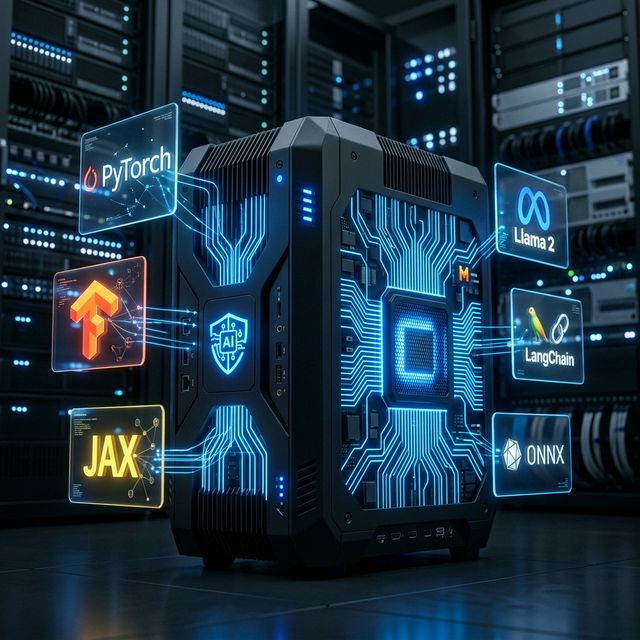
The MTIA v3, released in early 2026, shows a 3x performance-per-watt improvement over off-the-shelf H100s for Meta's specific PyTorch workloads. This allows Meta to run its recommendation engines—the core of Instagram and Facebook—at a fraction of the cost of their competitors. Efficiency isn't just about headcount; it's about Wattage-per-Insight.
Section 3: The "Generative-First" Product Pivot - Killing Legacy Features
Meta is systematically replacing "Traditional Features" with "Generative Agents." The era of "Static Interfaces" is over.
- Instagram: Feed discovery is no longer a simple collaborative filtering algorithm. It's now handled by multi-modal agents that understand the "Vibe" and "Cultural Context" of the content. They "watch" the videos to understand the nuance before recommending them.
- WhatsApp: Customer service for millions of businesses is being handled by "Llama-Business" agents. These aren't simple chatbots; they have "Agentic Memory" and can process transactions, handle refunds, and manage inventory without a human in the loop.
- Quest VR: The "V-Code" (Virtual Code) initiative allows users to build entire worlds just by speaking to an agent. This takes the complex task of 3D modeling and reduces it to natural language, opening the "Metaverse" to everyone.
This requires a different kind of workforce—one that understands "Generative Architecture" and "Prompt Orchestration" rather than simple "App Development." The 15% reduction is a "Cleanup" of the legacy talent that couldn't make the transition from 2D UI development to Agentic Logic.
Section 4: The CAPEX War - GPU clusters vs. Employee Benefits
The shift in Meta's capital expenditure (CAPEX) is staggering. In 2021, Meta spent billions on "Campus Culture"—free food, luxury offices, and massage therapists. In 2026, those budgets have been 100% liquidated and reallocated to "Compute Clusters."
Meta's 2026 data centers are the largest concentrated sites of compute in human history. The "Zuck-Cluster" in Iowa now houses over 1 million GPU equivalents. The electricity bill for this single site exceeds the entire operating budget of most mid-sized tech companies. When you see a layoff at Meta, you aren't seeing a company in trouble; you are seeing a company choosing "H100s over Headcount."
This is a structural bet on the "Power Law" of AI. Meta believes that 100 incredibly talented engineers backed by $10 billion in compute will produce more value than 10,000 average engineers backed by $100 million in compute. This is the "Talent Density" model taken to its logical, and somewhat brutal, extreme.
Section 5: The "Open Source" Geopolitics - Llama as the Industry OS
As we discussed in our Llama 4 deep dive, Meta's "Open Weights" strategy is a massive "Efficiency Play." By giving the model away, Meta gets thousands of external developers to "Debug," "Quantize," and "Improve" the model for free.
This allowing Meta to have a much smaller internal "Model Support" team than OpenAI or Google. They have outsourced their R&D to the global community, making each of their internal engineers 10x more effective. While Sundar Pichai and Sam Altman have to build vast internal teams to handle every edge case, Meta lets the "Fringe" developers on GitHub do the heavy lifting.
This has also turned Llama into the "Standard" for the enterprise. When a company builds on Llama, they are effectively building on Meta's infrastructure. This creates a "Gravity Well" that makes Meta's proprietary, high-performance versions of the models much more valuable for enterprise partners.
Section 6: The "Zuck-2026" Leadership Style - Architect-in-Chief
Mark Zuckerberg has evolved into a "Product-Manager-in-Chief." He is personally reviewing the architecture of the custom chips and the training data filters for Llama. This "Deep-Dive Leadership" is the only way to navigate such a rapid transition.
He is no longer trying to "Be Liked" by his employees; he is trying to "Be Right" about the technology. This "Hard-Core" culture (reminiscent of Elon Musk) is now the standard at Meta. The "Social Media Founder" personna is gone, replaced by a "Silicon Architect" who understands the physics of inference.
This transition has been painful for the culture. Internal surveys show a "Bimodal" distribution of employee happiness: the top 5% of engineers are more excited than ever, while the bottom 95% live in constant fear of the next algorithmic layoff. Meta is no longer a "Family"; it's a "High-Performance Compute Cluster" where humans are the biological nodes.
Section 7: Future Forecast - The "Meta-OS" and the Vision-Interface
By 2028, we expect Meta to release the "Meta-OS"—a neural-first operating system for glasses and wearables that replaces the smartphone entirely. The layoffs today are the preparation for that "Final Platform" war. Meta knows that if they don't own the "Interface," they will always be a tenant of Apple or Google.
The "Year of Efficiency" was the pivot point. It was the moment Meta stopped being a website and started being the "Plumbing" of the AI era. The 15% reduction in early 2026 is just the final polish on a machine that is now 100% focused on one goal: Achieving AGI before the hardware runs out of power.
Conclusion: The Efficient Giant - A Blueprint for the 2020s
Meta is the most "Efficient" large-cap company in the world in 2026. They have proven that you can double your output while cutting your headcount by 30% over three years. While the human cost is high, the "Technological Velocity" is undeniable. Meta is no longer "Moving Fast and Breaking Things"; they are "Moving Fast and Building the Future."
The lesson for every other tech company is clear: The "Layer of Translation" is your biggest cost. If you can't justify a role as being "Essential to the Logic," it won't exist by 2030. Meta hasn't just laid people off; they've invented a new way to work.
Next: We look at Oracle's $15B Cloud Pivot and the structural drivers of their $30k headcount reduction.